

Dental Implants
Your Complete Dental Implant Solution
Expert dental implants at Rosewood—affordable, advanced, and internationally trusted.
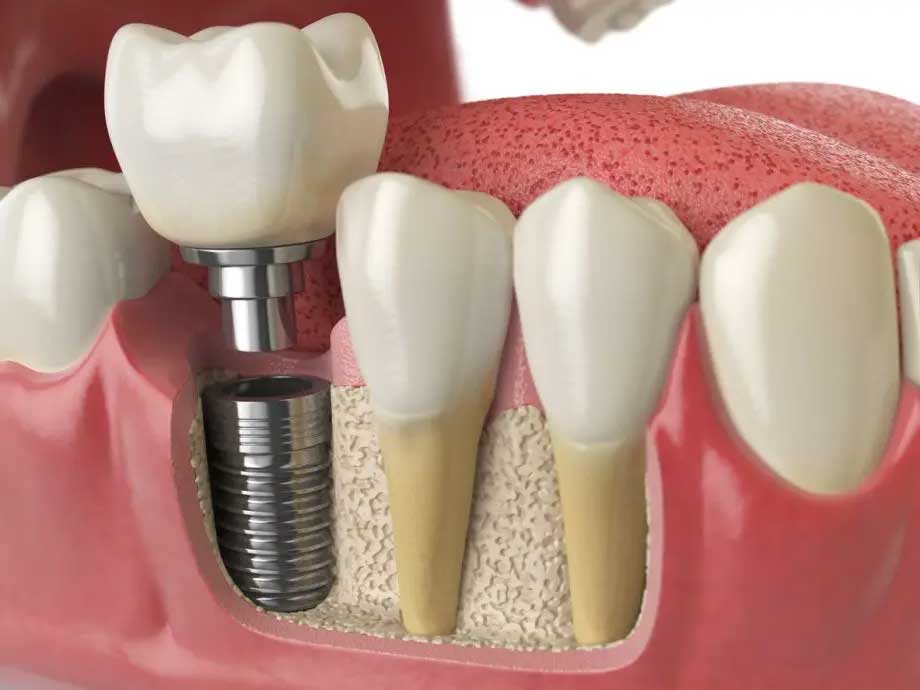
Dental implants are among the most advanced and successful methods for replacing missing teeth. They provide both aesthetic and functional results that mimic the appearance of natural teeth. Rosewood Dental Hospital, Sri Lanka, is a highly sought-after destination for dental implants due to significantly lower treatment costs compared to the UK and other countries. Rosewood Dental Hospital stands out by offering international-grade implant brands and expert surgeons at affordable rates.
This guide will help you understand everything you need to know about dental implants and what to expect when undergoing the procedure at Rosewood Dental Hospital.
What Are Dental Implants?
A dental implant is a small, titanium post surgically placed into the jawbone, acting as a root for an artificial tooth (dental crown). Implants are bio-compatible, strong, and provide a permanent base for fixed or removable replacement teeth.
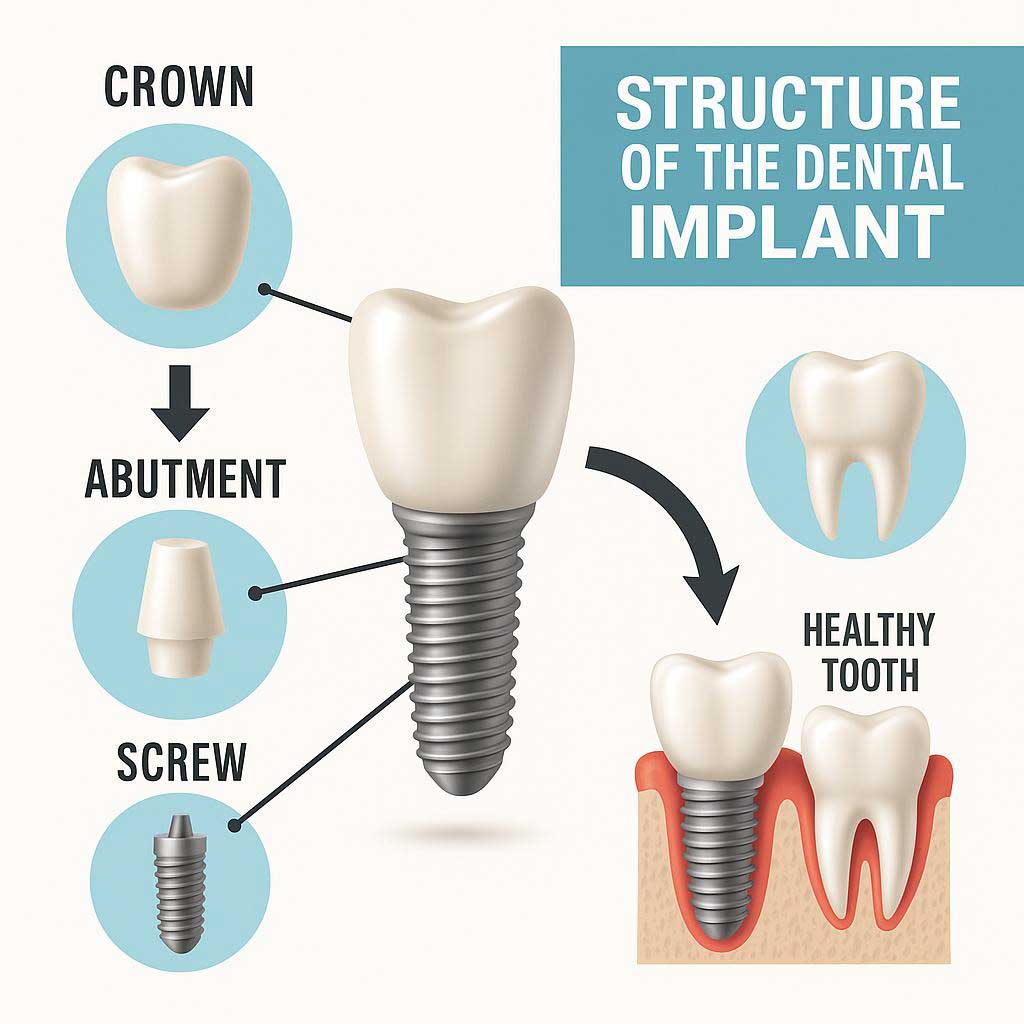
Single Dental Implant Structure:
- Implant Post / Titanium Screw – Serves as the artificial root.
- Abutment – Connects the implant post to the crown.
- Dental Crown – The visible tooth replacement made to match your natural teeth.
Dental Implant Procedures at Rosewood Dental Hospital
Types of Dental Implants
1. All-on-4 or All-on-6 Dental Implants (Full Arch Replacement)
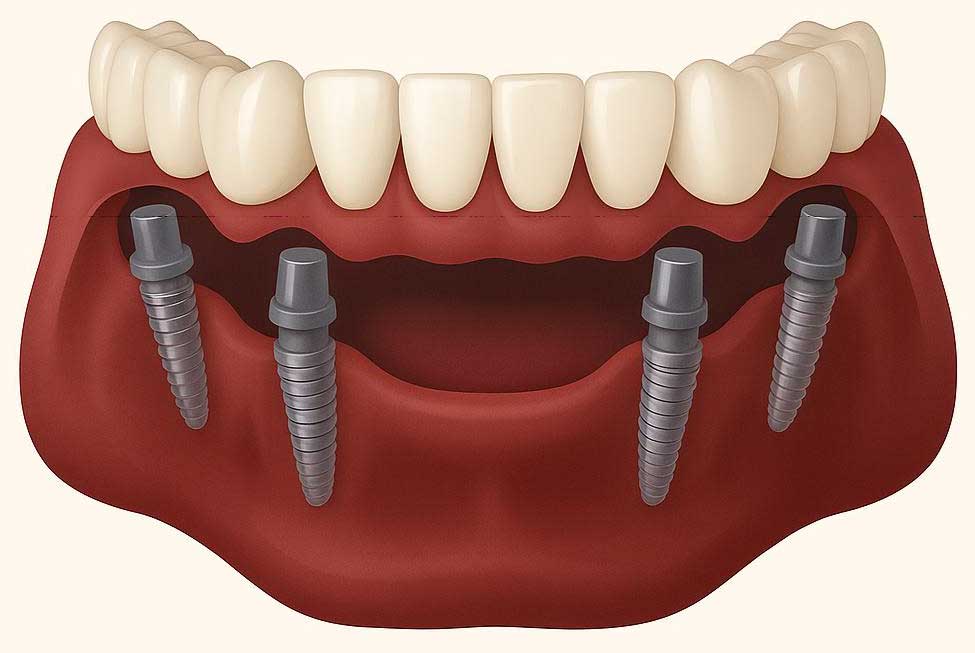
All-on-4 and All-on-6 dental implants are advanced full-arch restoration techniques designed for patients who have lost most or all of their teeth. These procedures involve placing four or six strategically positioned dental implants into the jawbone to support a full set of fixed prosthetic teeth.
This approach offers a stable, permanent alternative to traditional removable dentures. It is ideal for individuals with significant tooth loss who are looking for a secure, natural-looking, and long-lasting solution to restore their smile and oral function.
2. Zygomatic Implants (Anchored in the Cheekbone)
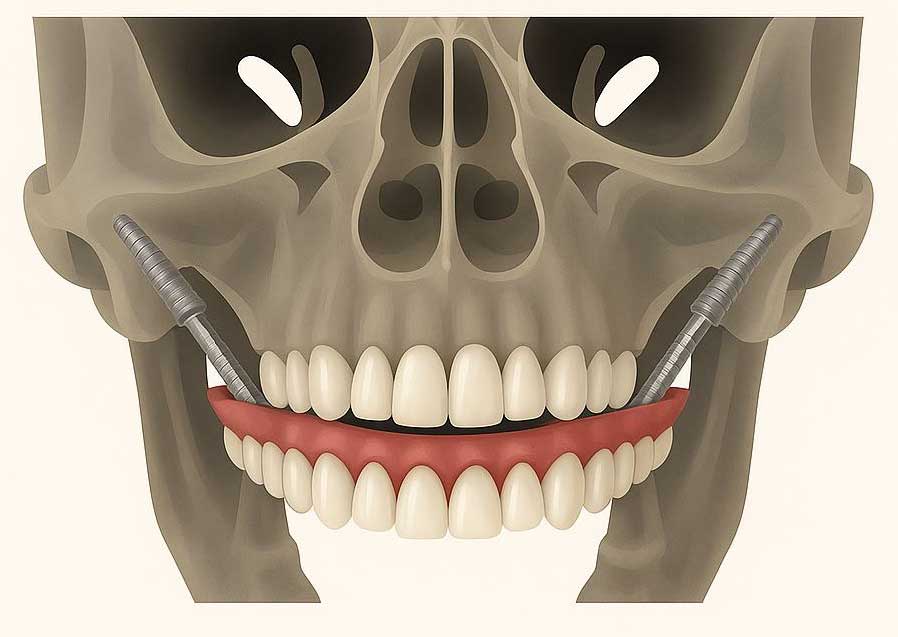
Zygomatic implants are a specialized solution for patients with severe bone loss in the upper jaw. Instead of being anchored in the jawbone like traditional implants, these implants are longer and are anchored into the zygomatic bone, commonly known as the cheekbone.
This technique eliminates the need for bone grafting or sinus lifts, making it a faster and more viable option for individuals who are not candidates for standard dental implants. Zygomatic implants provide excellent stability for fixed prosthetic teeth and are especially beneficial for patients with extreme maxillary bone resorption.
3. Mini Implants (Narrower in Diameter)
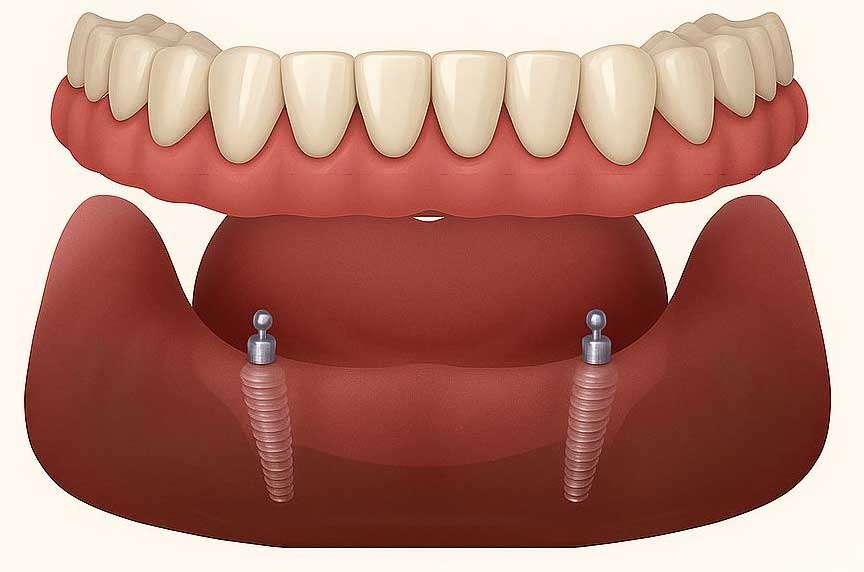
Mini dental implants are smaller, thinner versions of traditional implants, typically used in cases where bone density or space is limited. Due to their compact size, they are less invasive to place and often do not require extensive surgery or bone grafting.
Mini implants are especially suitable for:
- Elderly patients
- Patients with insufficient bone volume
- Supporting lower dentures or replacing small, narrow teeth
They offer a quicker, simpler, and more cost-effective alternative to conventional implants, making them ideal for patients with specific anatomical or financial needs.
4. Subperiosteal Implants (On the Bone)
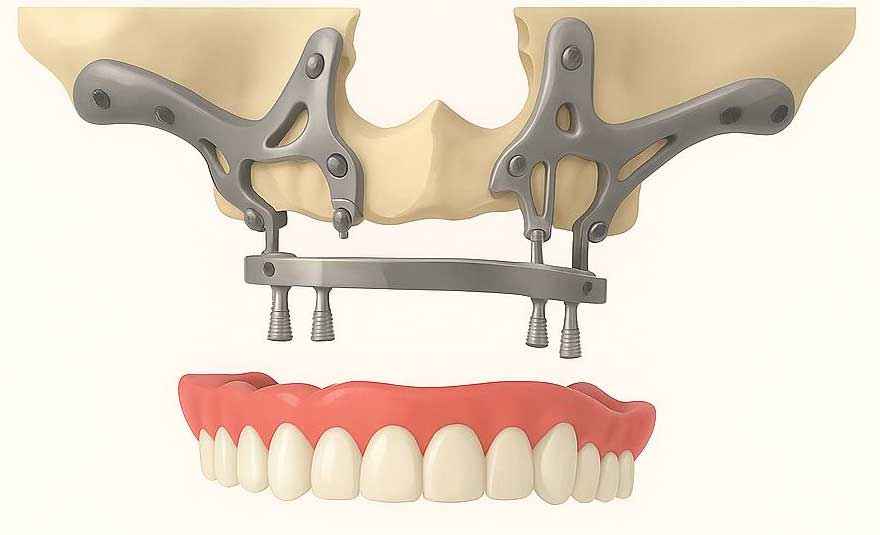
Subperiosteal implants are a unique type of dental implant placed directly on top of the jawbone but beneath the gum tissue. A custom metal framework rests on the bone, with titanium posts protruding through the gums to support the prosthetic teeth.
This implant type is typically recommended for patients who:
- Have severe bone loss and cannot undergo bone grafting
- Cannot support traditional endosteal (in-bone) implants
- Are unable to wear conventional dentures due to poor fit or stability
Subperiosteal implants provide a secure and stable alternative without the need for complex bone reconstruction procedures.
5. Endosteal Implants (Within the Bone)
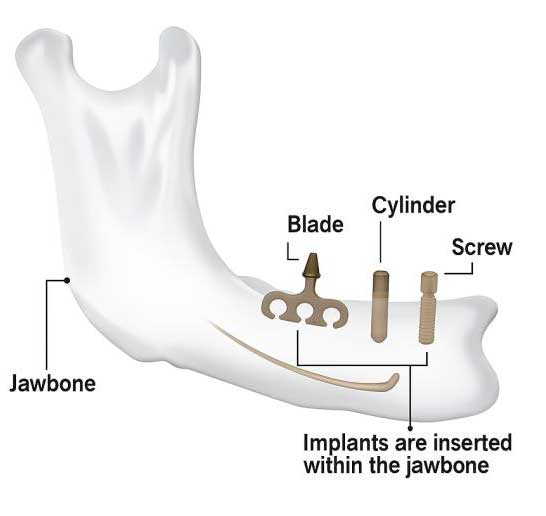
Endosteal implants are the most commonly used type of dental implant. They are surgically placed directly into the jawbone and typically come in the form of screws, cylinders, or blades. Once healed, they provide a stable base for one or more prosthetic teeth.
These implants are ideal for patients who:
- Have sufficient healthy jawbone to support the implant
- Prefer a long-term, durable solution over removable dentures or bridges
- Are looking for a natural feel and strong bite function
Endosteal implants offer a reliable and lasting option for tooth replacement with excellent success rates.
How Do You Know When You Need a Dental Implant?
You may need a dental implant if you:
- Have missing, cracked, or decayed teeth
- Suffer from advanced gum disease
- Experience issues with dentures or bridges
- Have a sunken facial appearance due to bone loss
- Struggle with chewing or speaking properly
Benefits of Dental Implants
- Durable & Long-Lasting – Can last a lifetime with proper care.
- Natural Look & Feel – Mimics the appearance and function of real teeth.
- Improves Chewing & Speaking – Restores normal oral functions.
- Preserves Bone Density – Prevents jawbone deterioration.
Risks of Dental Implants
- Infection at the implant site
- Implant failure due to poor integration or excessive pressure
- Nerve damage during surgery
- Sinus complications with upper jaw implants
Dental Implant Procedures at Suave Clinic
- Free Treatment Planning Consultation
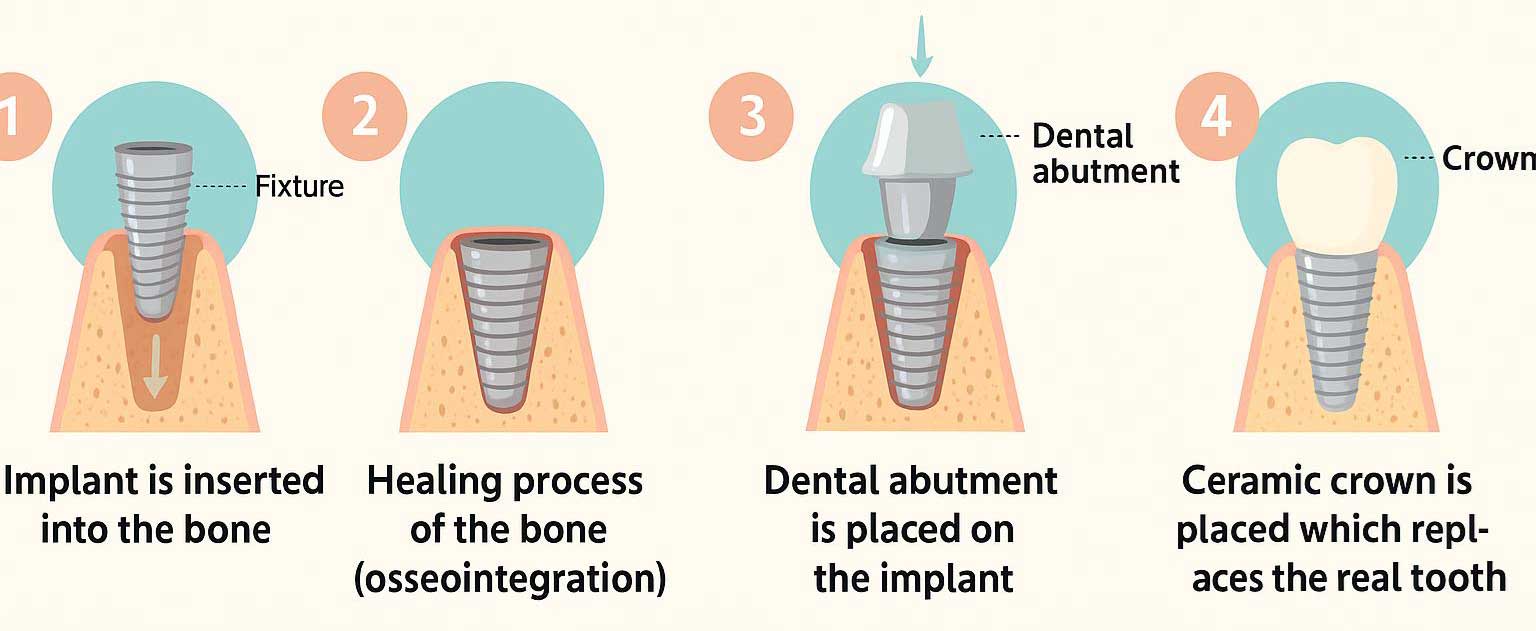
Includes full diagnostics with free X-rays and 3D analysis to assess your case and create a tailored treatment plan. - Dental Implantation Surgery
The implant is placed into your jaw. Bone grafting or sinus lifting may be required in certain cases. - Temporary Prosthesis Placement
A temporary acrylic denture is fitted for use during healing. - Osseointegration
Over 3–6 months, the implant fuses with your jawbone for stable support. - Removable Artificial Teeth
Temporary teeth are removed, and impressions are taken for your final prosthesis. - Placing the Abutment
The connector (abutment) is attached to hold the new tooth. - Fixed Artificial Tooth (Crown Placement)
A permanent crown, bridge, or denture is placed—usually in one session.
How Long Does It Take for a Dental Implant to Heal?
- Tissue Healing: 1–2 weeks for swelling and gum recovery.
- Bone Healing (Osseointegration): 3 to 6 months for full bone integration.
