

Don’t Ignore These Early Signs of Gum Disease

Bad breath that just won’t go away… gums that bleed when you brush… teeth that feel slightly loose… or gums that look red and swollen.
Many people think these are small problems, but they may actually be early warning signs of gum disease. Because these symptoms are often painless at first, they are easy to ignore. However, recognizing them early can help prevent serious damage to your gums and teeth.
What Causes Gum Disease?
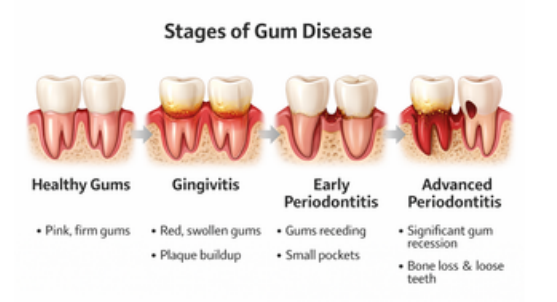
Gum disease usually begins with a mild condition called gingivitis. This happens when plaque, a sticky layer of bacteria, builds up along the gum line. At this stage, the gums may become red, swollen, and may bleed while brushing or flossing.
The good news is that gingivitis is reversible. With proper oral hygiene and professional dental cleaning, the gums can return to a healthy condition.
When Gingivitis Becomes More Serious
If gingivitis is not treated, it can progress into periodontitis, a more advanced form of gum disease. In this stage, the infection spreads deeper into the structures that support the teeth, including the bone.As the disease progresses, you may
notice:
- Gums pulling away from the teeth
- Persistent bad breath
- Loose or shifting teeth
- In severe cases, untreated periodontitis can even lead to tooth loss.
Why Early Detection Matters
The progression from gingivitis to periodontitis is often slow and painless. Because of this, many people do not realize there is a problem until the disease has already advanced. Regular dental checkups are important because they allow dentists to detect and treat gum disease early. Research shows that periodontal disease can affect overall health because bacteria and inflammation from infected gums may enter the bloodstream and are associated with conditions such as cardiovascular disease, diabetes, respiratory diseases, and pregnancy complications.
How to Prevent Gum Disease
Preventing gum disease is simple but requires consistent daily care.
Some important steps include:
- Brushing twice a day with a soft-bristled toothbrush using the correct technique, especially along the gum line
- Cleaning between the teeth daily with dental floss or interdental brushes
- Using mouthwash to help reduce bacteria
- Visiting the dentist regularly for professional cleaning every six months
- Maintaining a balanced diet and avoiding smoking
Professional cleanings are important because hardened plaque, called tartar, cannot be removed by brushing alone.
Protect Your Smile. Taking care of your gums is just as important as caring for your teeth. Early treatment and proper oral hygiene can prevent gum disease and help you maintain a healthy smile for life.
Dr. Dinithi Poornima Arunashantha
BDS (Undergraduate) – University of Peradeniya


